

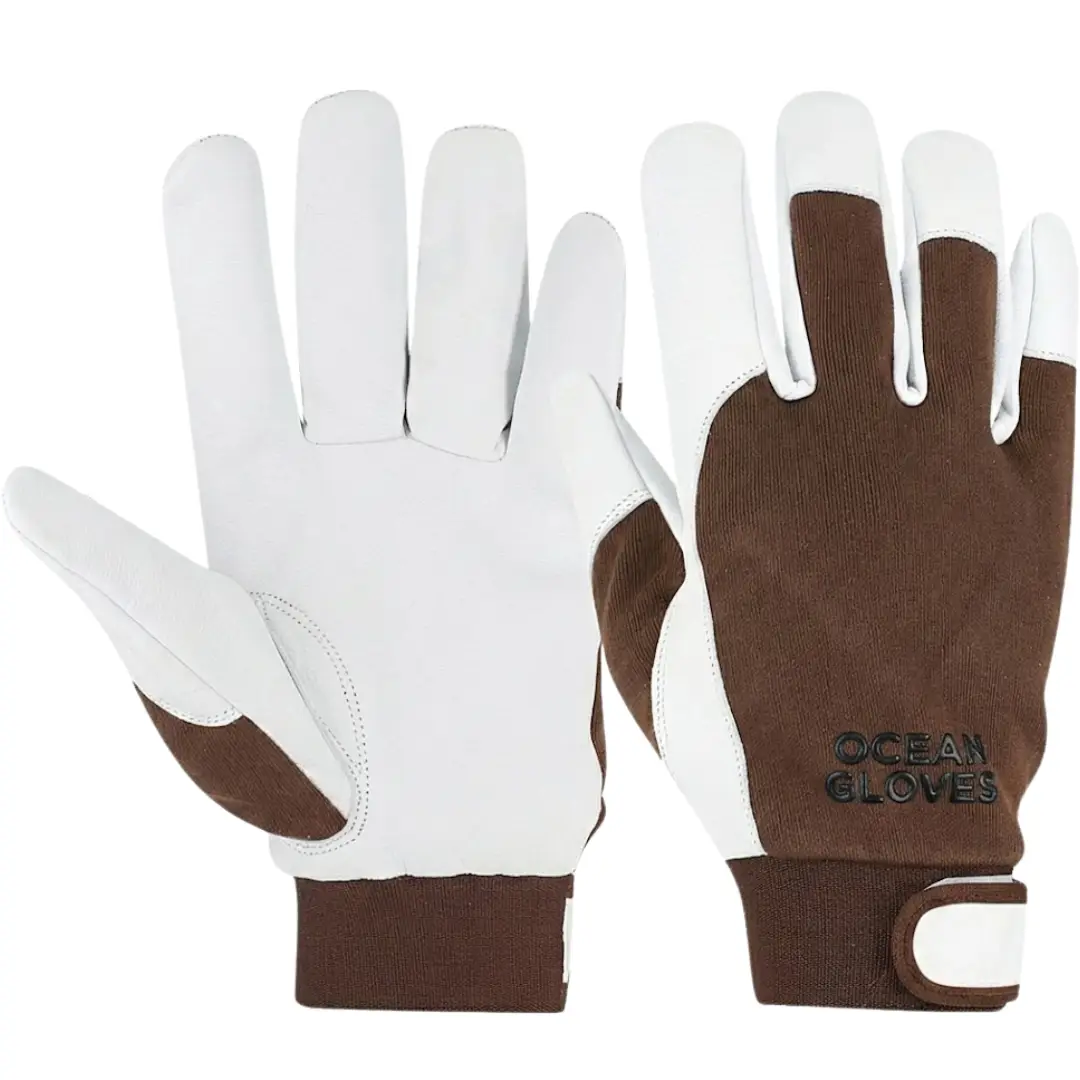
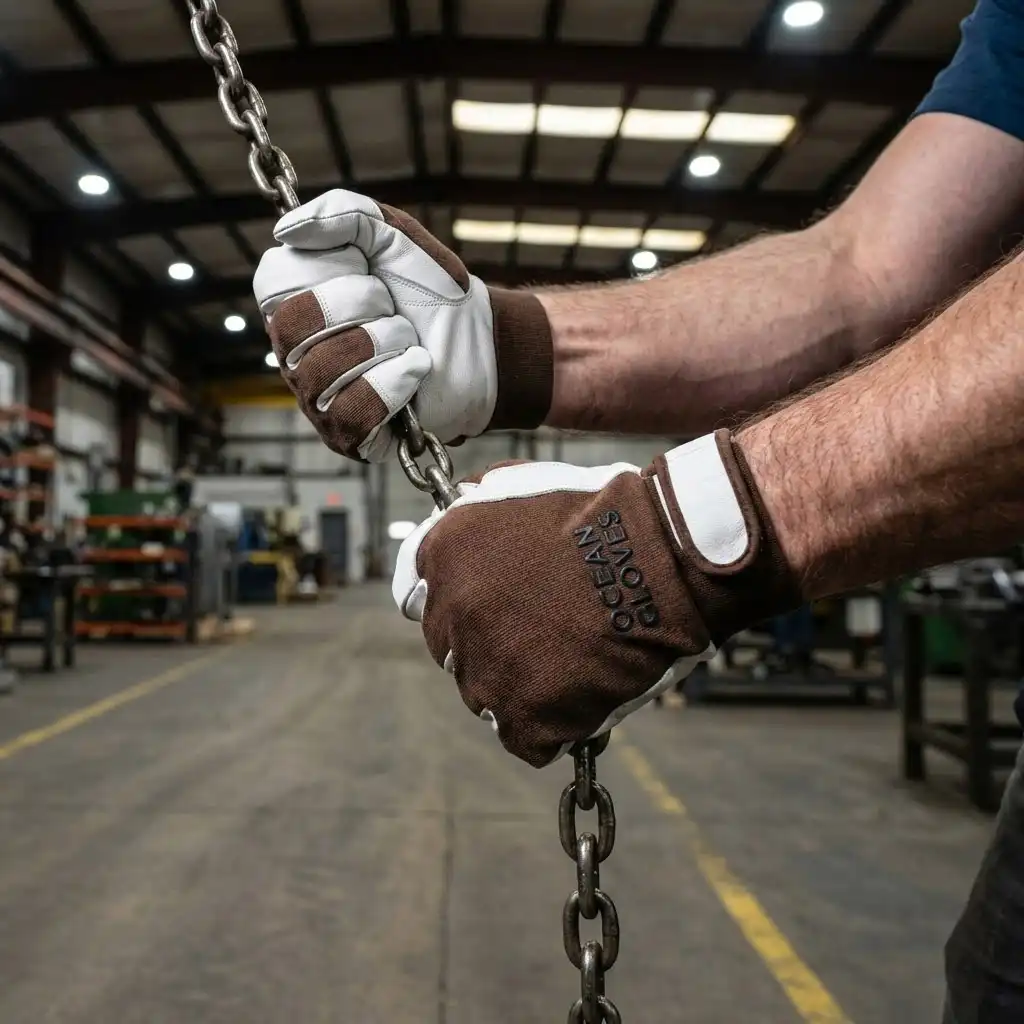
The Engineering Behind Assembly gloves with fabric back
When we design assembly gloves with fabric back, we are primarily managing heat dissipation and kinetic resistance. In a high-volume assembly line, a worker performs repetitive grasping motions thousands of times per day. A full leather glove traps heat, leading to palmar hyperhidrosis (sweaty palms), which softens the skin and increases the risk of blistering. By utilizing a fabric back assembly gloves design, we create a passive ventilation system that keeps the hand dry, maintaining the friction coefficient required for safe tool handling.
The Physics of Breathable Assembly Gloves
The effectiveness of breathable assembly gloves lies in the textile selection. We do not use generic cotton which absorbs moisture and becomes heavy. Instead, we utilize synthetic blends like Trinda and PC Interlock. These materials possess specific hygroscopic properties that pull moisture away from the skin surface to the outer layer of the fabric where it can evaporate. This is critical for maintaining grip stability. If the hand is wet inside the glove, the leather palm slides against the skin, reducing precision.
We often recommend breathable assembly gloves with fabric back and leather palm configurations for automotive and electronics manufacturing. The leather palm provides the necessary abrasion resistance against metal edges and fasteners, while the textile back allows for the rapid expansion and contraction of the dorsal hand muscles (the interossei) without the resistance found in stiff leather. This reduction in resistance directly correlates to lower hand fatigue metrics over an extended shift.
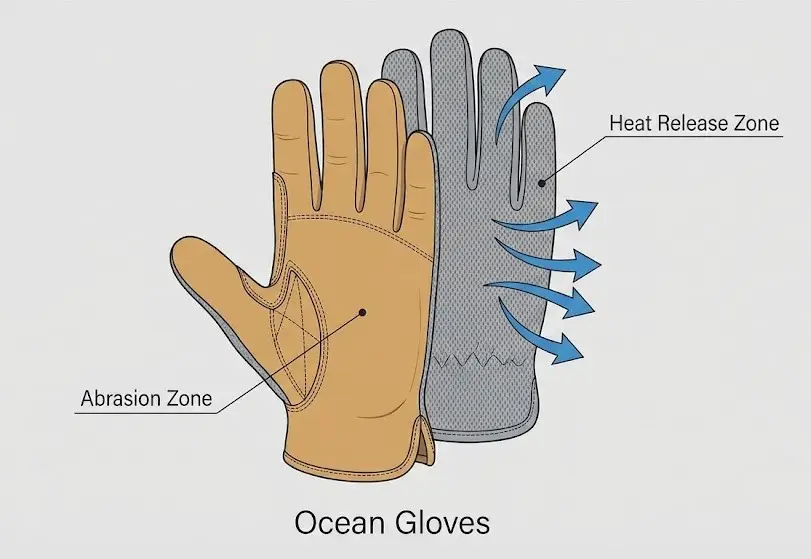
Abrasion Zone on the palm and Heat Release Zone on the back.
Raw to Box: Manufacturing Fabric Back Assembly Gloves
The manufacturing process for leather gloves fabric back differs significantly from standard leather gloves. It requires handling two materials with vastly different tensile strengths and stretch properties.
1. Material Selection and Cutting:
We start by selecting the leather for the palm. Whether we use goatskin or cowhide, the leather must be uniform in thickness. Variations in thickness can cause the needle to skip when transitioning to the fabric. For the back, we cut the textile rolls of Trinda or PC Interlock. The orientation of the cut is vital. We cut on the bias to maximize the lateral stretch of the fabric, ensuring the glove moves with the hand.
2. The Critical Junction Stitch:
The most difficult engineering challenge is the seam where the leather meets the fabric. This is where most cheap gloves fail. We use a double-lock stitch with high-tensile nylon thread. We adjust the tension of the sewing machine specifically for assembly gloves fabric back production. If the tension is too high, the needle holes in the fabric will widen and tear. If it is too low, the leather will not seal tight. We maintain a strict stitch density protocol to ensure the integrity of this junction.
3. Forming and Ironing:
Once stitched, the gloves are loaded onto heated hand molds. This step sets the memory of the fabric. Unlike leather which molds to the hand over time, the PC interlock fabric assembly gloves need to be heat-set to ensure they maintain their shape and do not sag after washing or extended wear.
Analyzing Material Options: Trinda vs PC Interlock
We offer multiple textile backings because different environments require different thermal properties.
Trinda Fabric Assembly Gloves:
Trinda is a robust, closely woven polyester fabric. It is known for its durability and resistance to snagging. We suggest trinda fabric assembly gloves for environments where there is a moderate risk of the back of the hand scraping against shelving or machinery. It offers better mechanical protection than standard cotton but remains breathable.
PC Interlock Fabric Assembly Gloves:
PC (Polyester-Cotton) Interlock is a double-knit fabric. It is softer and more flexible than Trinda. We manufacture PC interlock fabric back assembly gloves wholesale for clients prioritizing comfort and dexterity above all else. The interlock knit structure allows for four-way stretch, making it ideal for fine precision work where the hand needs complete freedom of movement.
Polyester Spandex Back Assembly Gloves:
For the ultimate fit, we use polyester spandex back. This material acts like a second skin. It applies mild compression to the hand, which some workers find reduces fatigue. However, it is less resistant to sparks or heat than Trinda.
Technical DNA: Comparative Specifications
Here is a direct comparison of the materials we use in our assembly gloves with fabric back exporter Pakistan operations.
| Feature Specification | Trinda Fabric Back | PC Interlock Back | Polyester Mesh Back |
| Primary Composition | 100% Polyester Tricot | Poly-Cotton Blend | 100% Polyester |
| Stretch Direction | 2-Way (Lateral) | 4-Way (Omni) | 2-Way (Lateral) |
| Abrasion Resistance | High | Medium | Low |
| Air Permeability | Medium (Structured) | Medium (Soft) | Very High (Open) |
| Heat Retention | Moderate | Low | Very Low |
| Structure Memory | Excellent | Good | Fair |
| Typical Application | Warehouse/Logistics | Light Assembly | Hot Climate Work |
Optimizing for Industry Applications for Assembly Gloves with Fabric Back
The demand for these gloves varies by sector. We supply automotive assembly gloves that utilize a cowhide palm with a heavy-duty Trinda back because car assembly requires handling oily parts and sharp chassis components. The fabric back allows the mechanic to reach into tight engine bays without the bulk of a full leather cuff.
In contrast, our electronics manufacturing gloves often use a sheepskin palm with a lightweight nylon mesh or PC interlock back. The sheepskin offers high tactile sensitivity for handling small screws and circuit boards, while the fabric back prevents particulate accumulation that can happen with rougher leathers.
We also see high demand for breathable work gloves in the logistics sector. Warehouse workers handling cardboard boxes all day need the grip of a split leather palm but the cooling of a fabric back. Our leather palm assembly gloves with trinda fabric back are the standard issue for many large distribution centers because Trinda does not pill or fray easily when rubbing against cardboard.
Case Study: Solving Dermatitis in a Dubai Logistics Center
A major logistics client in Dubai approached us with a significant problem. Their workers were suffering from contact dermatitis. They were using fully coated nitrile gloves in a non-climate-controlled warehouse where temperatures exceeded 40°C. The sweat accumulation inside the impermeable gloves was causing fungal infections and skin breakdown, leading to high medical downtime.
We proposed a switch to our breathable assembly gloves with fabric back and leather palm. We selected a high-grade goatskin palm for durability and coupled it with a moisture-wicking white cotton blend back. The white color reflected radiant heat, while the porous nature of the fabric allowed sweat to evaporate instantly.
The results were immediate. Skin complaints dropped by 90% within the first month. Furthermore, the workers reported that the leather palm offered better grip on dusty boxes than the slick nitrile they were using previously. By sourcing comfortable fabric back assembly gloves manufacturer Pakistan direct, the client also reduced their per-unit cost by 15% compared to the branded coated gloves they were buying locally.
Why Sourcing from Sialkot Matters
Sialkot is the global hub for technical glove manufacturing. As a fabric back work gloves supplier Pakistan, Ocean Gloves has access to both premium tanneries and advanced textile mills within a 20-kilometer radius. This proximity allows us to quality check the leather hides and the fabric rolls personally before they enter our production line.
Many competitors simply buy ready-made gloves from general markets and repackage them. We build the glove from the raw materials up. Ocean control the pH levels of the leather to prevent skin irritation. and test the burst strength of the fabric back. When you look for a lightweight assembly gloves with polyester back Sialkot partner, you need a factory that understands the engineering of the textile, not just the sewing.
FAQs:
Q: Why would I choose Trinda fabric over a standard cotton back?
A: Cotton is hydrophilic, meaning it absorbs water and holds it. Once a cotton back gets wet from sweat, it becomes heavy, clammy, and loses its structural shape. Trinda is a synthetic knit that is hydrophobic. It wicks moisture away and retains its shape even when damp. For industrial consistency, Trinda fabric assembly gloves are superior to basic cotton.
Q: How do you ensure the fabric back doesn’t tear away from the leather palm?
A: This is a tension issue. Leather is dense; fabric is porous. If you use a needle thick enough for leather on a delicate fabric, it perforates the fabric too much. We use a ball-point needle and a specific thread tension setting that creates a lock-stitch without cutting the fabric yarns. We also double-stitch the stress zones on our leather palm assembly gloves with trinda fabric back.
Q: Can I get these gloves with a waterproof lining?
A: Technically yes, but it defeats the purpose. The primary engineering goal of assembly gloves with fabric back is airflow and breathability. Adding a waterproof membrane blocks that airflow. If you need waterproofing, we recommend our fully dipped or full-leather waterproof models instead.
Q: What is the difference between PC Interlock and Fleece backing?
A: PC interlock is a knitting technique that creates a smooth, cool-to-the-touch fabric ideal for hot environments and dexterity. Fleece is brushed to trap air and create warmth. You would choose fleece for winter work, but for general assembly where heat management is key, PC interlock fabric back assembly gloves wholesale options are the correct engineering choice.
Q: Does the color of the fabric back impact the glove’s performance?
A: In terms of physics, yes. Darker fabrics absorb more radiant heat. For outdoor construction in hot climates, we recommend light-colored backing (white or yellow). However, for warehouse work where dirt visibility is a concern, darker colors (black or navy) extend the visual lifespan of the glove. We can dye our polyester back assembly gloves to any Pantone code you require.
Q: Why do you recommend a Velcro closure on fabric back gloves?
A: Fabric backs are flexible. Without a secure closure, the glove can slip forward during heavy lifting. An adjustable Velcro strap anchors the glove at the wrist, ensuring the leather palm stays aligned with the user’s hand. This is particularly important for comfortable fabric back assembly gloves manufacturer Pakistan designs where fit is a priority.
Q: Is the Spandex back puncture resistant?
A: No. Spandex and polyester mesh are designed for breathability and flexibility, not puncture resistance. The leather palm provides the protection. If the back of the hand is exposed to sharp hazards, we would need to integrate a TPR impact skeleton or use a Kevlar knit, which changes the classification of the glove.
Q: How does the “Four-way stretch” in your specs improve productivity?
A: Standard fabrics only stretch horizontally (2-way). When a worker makes a fist, the fabric must stretch vertically as well. If it doesn’t, the glove fights the hand, causing muscle fatigue in the dorsal region. Our four-way stretch assembly gloves move with the hand’s biomechanics, requiring less energy to close the grip, which adds up over thousands of repetitions.
Q: Can you manufacture the fabric back with high-visibility strips?
A: Yes. We can integrate reflective tape or use high-visibility fluorescent Trinda fabric. This is a common requirement for our breathable assembly gloves with fabric back and leather palm models destined for airport ground handling or construction zones where visibility is a safety mandate.
Q: What is the advantage of the “Gun cut” pattern with fabric backs?
A: The Gun cut moves the seams to the back of the fingers. Since the back is fabric, this removes bulky leather seams from the working surface of the palm and fingers. It maximizes dexterity and comfort, allowing the fabric to do the work of flexing while the leather does the work of gripping.
Q: Why is goatskin preferred over cowhide for the palm in these hybrid gloves?
A: Goatskin has a naturally higher lanolin content and tighter grain structure. This allows us to shave it thinner (down to 0.7mm) without losing tensile strength. A thinner palm combined with a fabric back creates the ultimate high-dexterity glove. Cowhide is thicker and better for heavy lifting, but for assembly, goatskin is the engineer’s choice.
Q: Do you use Azo-free dyes for the fabric backing?
A: Absolutely. As a responsible fabric back work gloves supplier Pakistan, we strictly use Azo-free dyes for all our textiles. This is critical for compliance with EU REACH standards and ensures that the gloves do not leach harmful carcinogens onto the worker’s skin when they sweat.
Q: How does the weight of your fabric back glove compare to a full leather driver?
A: A standard cowhide driver glove weighs approximately 120-140 grams per pair. Our lightweight assembly gloves with polyester back Sialkot production line yields gloves weighing between 70-90 grams. This reduction in mass significantly lowers the kinetic energy required for hand movement.
Q: Can the fabric back withstand spark exposure in light welding?
A: We do not recommend polyester or nylon backs for any hot work or welding. These synthetics will melt. For environments with incidental sparks, we would recommend a chemically treated cotton or a specialized flame-resistant woven fabric, but strictly speaking, these are assembly gloves, not hot-work gloves.
Q: What is the “Wing Thumb” design mentioned in your specs?
A: The Wing Thumb construction angles the thumb slightly away from the palm, matching the natural resting position of the hand. When combined with a flexible fabric back, this eliminates the bunching of material at the thumb crotch, which is a common source of irritation in cheaper straight-thumb patterns.
Q: How do you control quality on the fabric rolls?
A: We perform GSM (Grams per Square Meter) testing and burst strength testing on every batch of fabric before cutting. If the Trinda or PC Interlock does not meet our density weight requirements, it is rejected. This ensures that the backing doesn’t tear prematurely.
Q: Is there a difference in grip between the fabric back and full leather models?
A: The palm grip is identical since it is the same leather. However, the stability of the grip can be better in full leather for extremely heavy loads. For medium to light loads, the fabric back is superior because the snug fit prevents the glove from rotating on the hand.
Q: Can we screen print our logo on the fabric back?
A: Yes, the fabric back provides an excellent substrate for silicone or plastisol screen printing. It is often clearer and more durable than stamping logos into leather, which can fade with abrasion. This is why many brands choose comfortable fabric back assembly gloves manufacturer Pakistan for their OEM needs.
Q: What happens if the fabric back gets snagged?
A: It depends on the weave. Our Trinda fabric is a lock-knit, meaning if one yarn is cut, it does not unravel continuously. Cheaper jersey fabrics will “run” like a stocking. We choose lock-knits specifically to localize any damage and extend the usable life of the glove.
Q: Why do you refer to these as “Hybrid-Flow” gloves?
A: It is an engineering term we use to describe the balance of airflow (through the back) and protection (on the palm). It represents the optimal trade-off for assembly lines where environmental control (AC) might be poor, but hand protection is mandatory.
WhatsApp us or email Sales@oceangloves.com
Facebook | Twitter | Instagram | YouTube | LinkedIn