

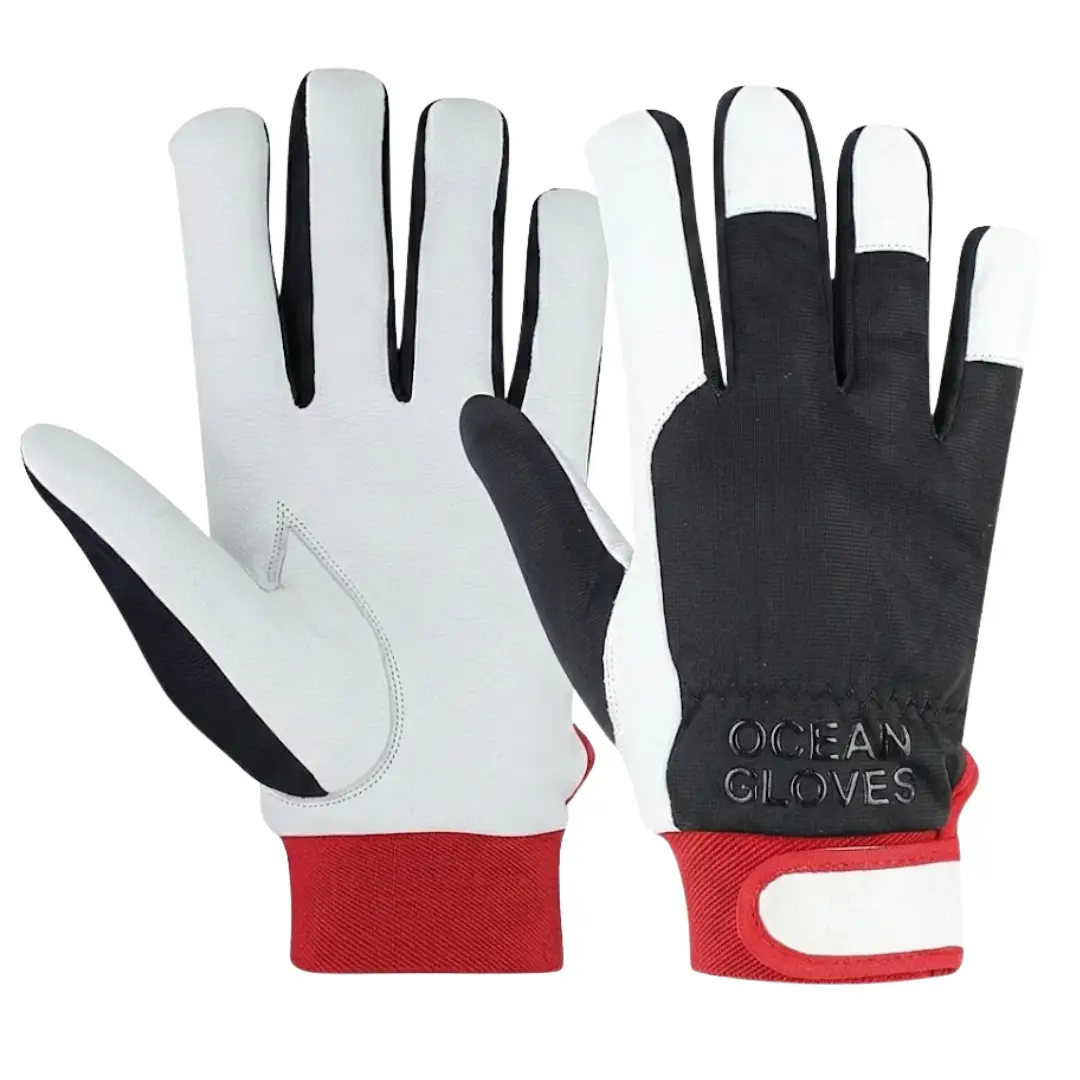
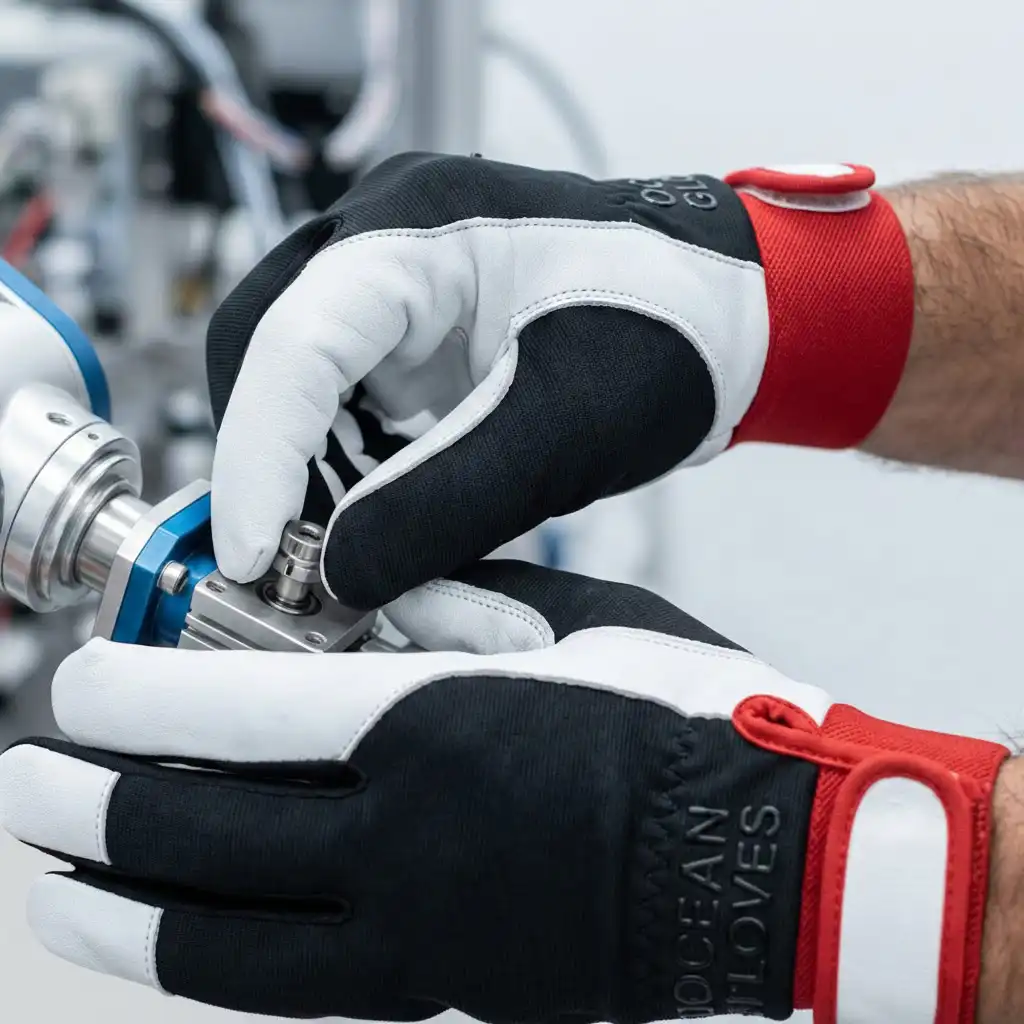
The Engineering Behind Premium Lined Assembly Gloves
Designing premium lined assembly gloves is a battle between two opposing forces: insulation and dexterity. In the general assembly sector, particularly for automotive and cold storage logistics in Northern Europe, workers need to handle small components like screws, wiring, and packaging tape. Standard winter gloves are often too thick, resembling boxing gloves rather than precision tools. At Ocean Gloves Corporation, we approach this problem as an engineering challenge. We manufacture CE marked winter gloves that maintain the fine motor skills of the wearer while providing certified thermal protection.
Our approach starts with the selection of materials. We do not use generic leather scraps. We select premium leather winter gloves material based on specific thickness gauges that allow for the inclusion of a liner without expanding the glove’s profile significantly. The integration of the fleece lining is critical. If the liner is floating or poorly stitched, it pulls out when the worker removes their hand, creating a safety hazard and frustration. We utilize a specific lock-stitch technique at the fingertips to anchor the liner permanently to the leather shell. This attention to detail is what makes us a leading premium winter assembly gloves manufacturer Sialkot.
Material Architecture and Thermal Physics of Premium Lined Assembly Gloves
The core of our certified winter assembly gloves lies in the material layering. We utilize a specific grade of fleece that offers high loft for heat retention but compresses easily when the hand closes. This compressibility is vital. When a worker grabs a tool, the insulation must flatten to allow contact, and then rebound to trap air which is the actual insulator when the hand relaxes.
We pair this with Trinda fabric on the back of the hand. Leather is excellent for the palm due to its abrasion resistance, but a full leather winter glove can trap sweat. Moisture is the enemy of warmth; wet hands get cold twenty times faster than dry hands. The Trinda fabric winter gloves design allows for moisture vapor transmission, keeping the internal microclimate of the glove dry. This combination results in CE compliant thermal gloves that function effectively across an 8-hour shift, not just for the first twenty minutes.
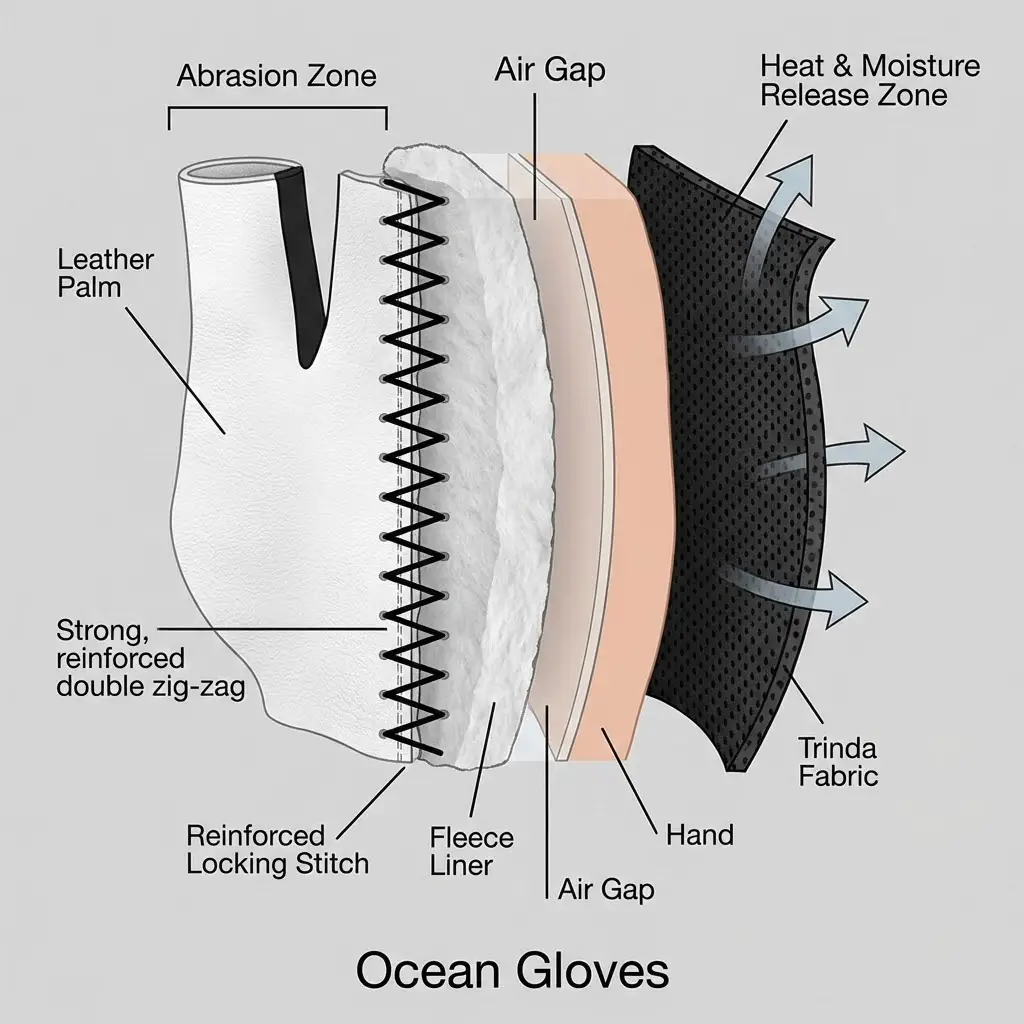
Cross-section of the glove showing the Leather Palm Locking Stitch Fleece Liner Hand, highlighting the air gap for insulation and the moisture escape route through the Trinda back.
The “Raw to Box” Manufacturing Process
As an EN388 winter gloves exporter Pakistan, we control the entire vertical supply chain. It begins at the tannery. We treat the hides with specific fat-liquors that prevent the leather from stiffening in cold temperatures. Standard leather can become boardy and hard at temperatures below zero. Our process ensures the collagen fibers in the leather remain lubricated and flexible even in freezing conditions.
Once the leather is cut using hydraulic press dies to ensure exact sizing uniformity, the assembly begins. The fleece lining is cut slightly smaller than the outer shell. This differential sizing prevents bunching inside the glove. The four-way stretch fabric is sewn to the leather palm using high-tensile nylon thread. We then attach the velcro closure winter gloves mechanism. We use industrial-grade hook and loop fasteners that do not degrade after repeated opening and closing in dusty warehouse environments. Finally, the gloves undergo a rigorous quality control check where we measure the stitch density and verify the lining attachment before they are packed for export to the UK, Scandinavia, and Canada.
Technical DNA of Premium Lined Assembly Gloves
Below is the technical data for our premium lined assembly gloves with velcro closure and CE marking.
| Specification | Technical Detail | Engineering Benefit |
| Palm Material | Premium Goat/Sheep/Cow Leather (0.7-0.8mm) | High abrasion resistance with maximum tactile sensitivity. |
| Back Material | Trinda / Four-way Stretch Fabric | Allows heat dissipation and moisture wicking during exertion. |
| Lining | Micro-fleece (100gsm – 150gsm) | High warmth-to-weight ratio; rapid drying properties. |
| Closure | Adjustable Velcro Strap | Prevents snow/debris entry; stabilizes glove on the wrist. |
| Standard | EN 388:2016 (2121X) | Certified protection against abrasion, blade cut, tear, and puncture. |
| Standard | EN 420 (Dexterity Level 5) | Ensures the glove does not impede fine assembly work. |
| pH Value | 3.5 – 9.5 (Neutral) | Prevents skin irritation and dermatitis during long shifts. |
| Chromium VI | < 3 mg/kg (Chrome Free) | Compliant with REACH regulations for EU markets. |
Why We Choose Fleece Over Foam
You might ask why we produce fleece lined CE gloves rather than using foam insulation. Foam is cheaper and waterproof, but it lacks breathability and tactility. Foam acts as a barrier to movement. Fleece, being a woven synthetic wool substitute, allows the leather to move naturally with the hand. For professional winter assembly, where the user is operating forklifts, scanning guns, or assembling crates, the feedback from the fingertips is essential. Foam dulls this feedback. Our fleece lined certified gloves maintain that critical connection between the worker and the workpiece.
Comparative Analysis: Leather vs. Synthetic for Winter
While we do manufacture synthetic options, there is a reason professional grade CE certified thermal assembly gloves are predominantly leather-faced. Synthetic materials, particularly in freezing conditions, can become brittle or slick. Leather maintains a natural grip on cold, condensation-covered metal surfaces. The porous nature of the leather palm also aids in the grip, creating a suction effect that synthetics struggle to replicate without heavy chemical coatings. For the European standard winter assembly gloves Sialkot produces, leather remains the superior choice for durability and performance in mixed-climate warehouses.
The Scandinavian Logistics Challenge
A major logistics firm in Sweden approached us with a problem. They were using thick, fully waterproof ski-style gloves for their forklift drivers. The drivers were taking the gloves off to operate the touchscreens and fill out paperwork because the gloves were too clumsy. This led to a high rate of hand frostnip and dropped inventory.
We engineered a solution using our premium lined assembly gloves. Ocean adjusted the leather thickness on the index finger to maximize sensitivity and utilized a specific Trinda fabric on the back that offered wind resistance without total air blockage. We also ensured these were CE marked premium fleece lined assembly gloves for winter compliance. The result was a 40% reduction in glove removal incidents and a significant drop in hand injuries. The drivers could keep the gloves on for the entire shift, maintaining compliance and warmth. This is the difference between buying a glove off the shelf and working with a certified winter work gloves supplier Pakistan that understands the application.
FAQs
1. Why is the EN 388 rating important for premium lined assembly gloves?
The EN 388 rating verifies the mechanical resistance of the glove. For certified winter assembly gloves, it is not enough to just be warm; the glove must protect against abrasion from cardboard boxes, pallets, and tools. Our certification ensures you are meeting safety protocols.
2. How does the fleece lining impact the dexterity of CE marked winter gloves?
We use a micro-fleece that is dense but thin. This provides thermal insulation by trapping air near the skin without adding the bulk associated with traditional wool or pile linings. This balance is key for professional winter assembly tasks.
3. Can I get EN388 certified winter assembly gloves manufacturer Pakistan to customize the leather type?
Yes. While goatskin is preferred for dexterity, we can engineer these gloves using cowhide for heavier abrasion resistance or sheepskin for maximum tactile sensitivity, depending on your specific industrial application.
4. What is the difference between EN 511 and EN 388 for these gloves?
EN 388 covers mechanical risks like cuts and tears. EN 511 covers cold protection. These premium winter work gloves are designed primarily for mechanical protection in cold environments. While they offer thermal retention, they are optimized for active work where dexterity is the priority over static thermal isolation.
5. Why do you use Trinda fabric on the back of premium thermal assembly gloves?
Trinda is a warp-knitted polyester fabric that is extremely durable and resistant to laddering. It provides a snug fit that synthetic leather cannot offer, and it allows the hand to breathe, which is critical to preventing sweat buildup in cold conditions.
6. Are these fleece lined CE gloves suitable for wet environments?
These gloves are water-resistant due to the natural properties of the leather and the tight weave of the Trinda, but they are not fully waterproof. For completely wet conditions, we would recommend a fully coated latex or nitrile solution, though you would sacrifice breathable comfort.
7. How do you ensure the lining does not pull out in European standard winter assembly gloves Sialkot?
We utilize a manufacturing technique called “tip-locking” or “tabbing.” The fleece liner is sewn directly into the leather at the fingertips and the wrist. This mechanical bond prevents the liner from inverting when a sweaty hand is removed from the glove.
8. Do your premium lined assembly gloves with velcro closure and CE marking comply with REACH?
Absolutely. All leather used in our facility is tested for Chromium VI content and pH balance. We ensure that no banned azo dyes or harmful chemicals are present, making them safe for export to the EU and UK markets.
9. What makes professional grade CE certified thermal assembly gloves different from hardware store gloves?
Consistency and traceability. Our gloves are manufactured in batches where materials are tested against the technical file submitted for CE certification. Hardware store gloves often vary in leather quality and lining thickness from pair to pair.
10. How does the velcro closure winter gloves design improve safety?
A loose cuff can catch on machinery or shelving. The velcro closure allows the worker to tighten the cuff securely around the wrist, preventing snagging hazards and stopping cold air or debris from entering the glove.
11. Can you produce CE marked premium fleece lined assembly gloves for winter with a touchscreen feature?
Yes, we can treat the fingertips of the leather with a conductive coating or sew in conductive threads, allowing the user to operate tablets and scanners without removing the gloves and exposing hands to the cold.
12. Why is goatskin often used in CE certified winter assembly gloves?
Goatskin has a high lanolin content, which makes it naturally softer and more water-resistant than cowhide. Its high tensile strength allows us to shave it thinner for better dexterity without compromising the structural integrity of the glove.
13. What is the typical lifespan of fleece lined leather gloves in a warehouse setting?
This depends on the intensity of the work, but the leather palm is designed to outlast synthetic alternatives in handling abrasive materials like cardboard and wood. The Trinda back is also resistant to snagging, extending the glove’s usable life.
14. Do EN-420 winter gloves requirements affect sizing?
Yes. EN 420 dictates standard sizing and dexterity levels. Because we add a liner, we adjust our cutting dies to slightly larger dimensions to accommodate the fleece without compressing the hand, ensuring the final fit corresponds accurately to the user’s size.
15. How do warm certified gloves prevent hand fatigue?
Fatigue often comes from fighting the glove’s material to close the hand. By using flexible Trinda fabric and soft, oil-treated leather, we reduce the resistance the worker feels when gripping objects, significantly lowering muscle fatigue over a shift.
16. Are Premium leather winter gloves better than synthetic for sustainability?
Leather is a byproduct of the food industry and is biodegradable. Synthetic gloves are often made from petroleum-based plastics. We tan our leather using environmentally responsible processes, making them a viable option for eco-conscious procurement.
17. What does the “X” mean in the EN 388 (2121X) rating for these gloves?
The “X” indicates that the TDM-100 cut test was not performed or not applicable, usually because the glove was tested under the Coupe test method. For assembly gloves where cut risk is low, the abrasion and tear ratings are generally more critical.
18. Can Certified cold weather gloves be used for driving?
Yes. The flexibility of the leather and the secure fit provided by the velcro closure make them excellent for operating forklifts, delivery trucks, and heavy machinery where steering wheel grip and control feedback are necessary.
19. How does the thermal certified gloves lining affect grip?
If the lining is too thick, it acts as a roller bearing between the hand and the object, causing slippage. Our fleece is gauge-calibrated to minimize this internal movement, ensuring that when the hand grips, the force is transferred effectively to the object.
20. Why buy CE marked winter gloves Pakistan directly from the manufacturer?
When you buy direct, you are speaking to the engineers who select the hides and oversee the stitching. We can modify the specs, adjust the lining weight, or alter the cuff design to meet your specific hazards, all while ensuring the CE technical file is updated accordingly.
WhatsApp us or email Sales@oceangloves.com
Facebook | Twitter | Instagram | YouTube | LinkedIn