

The Engineering Behind Impact Resistant Assembly Gloves
To the untrained eye, all safety gear looks similar, but the engineering behind our impact resistant assembly gloves is what separates a minor bruise from a career ending injury. As a manufacturer situated in Sialkot, the leather capital of Pakistan, we approach glove construction from a metallurgical and anatomical perspective. We do not just sew leather together. We build a chassis that integrates three distinct layers of protection including abrasion resistance, cut defense, and impact dispersion. This section outlines exactly how we manufacture these heavy duty impact gloves and why our material choices matter for your specific industrial application.
The Physics of Impact Protection Gloves and TPR Integration
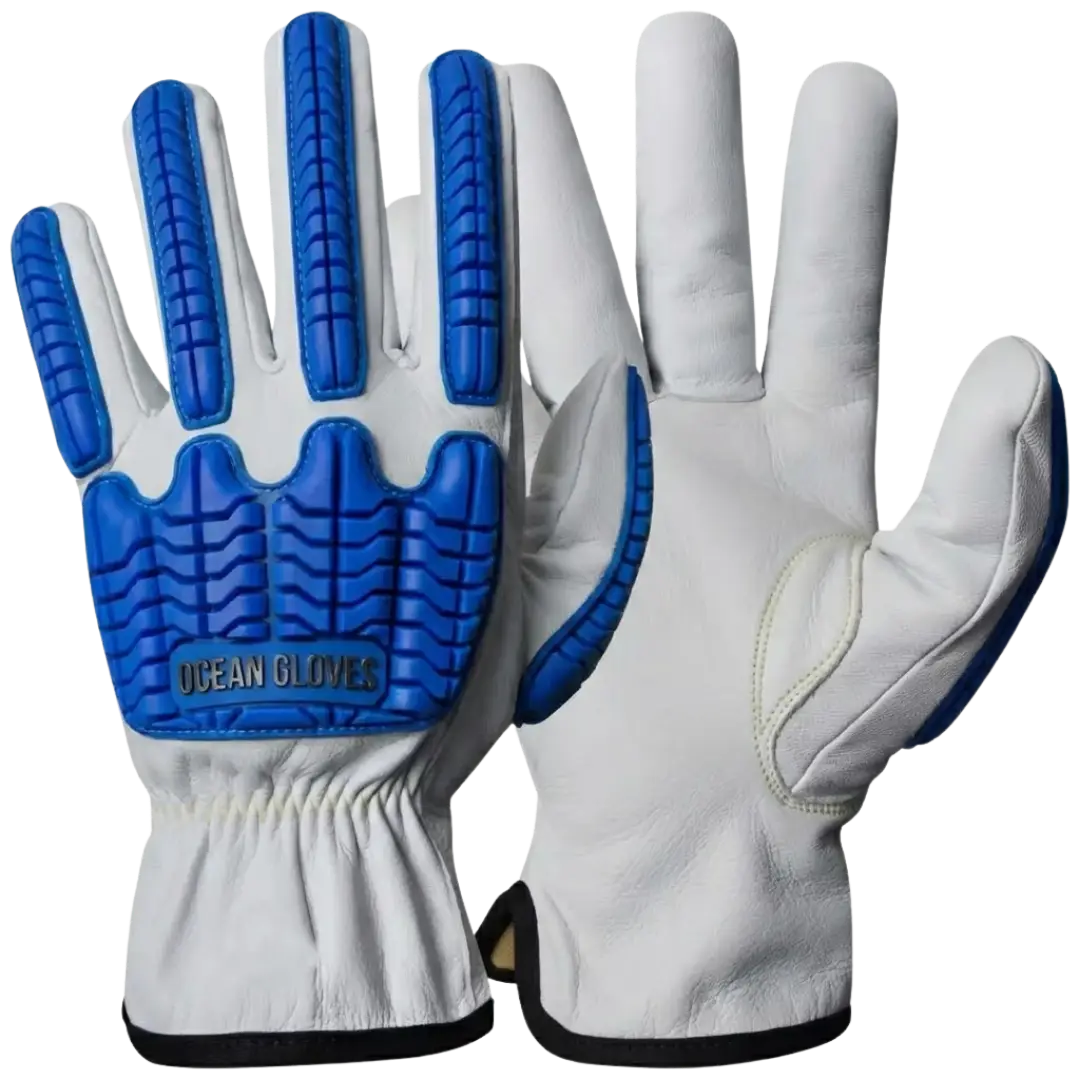
The defining feature of these gloves is the Thermo Plastic Rubber or TPR impact protection. The goal of anti impact assembly gloves is not to stop the force but to disperse it. When a heavy tool or loose debris strikes the back of the hand, the force is concentrated on a small point which causes bone fractures. The TPR pads on our gloves are engineered to absorb that kinetic energy and spread it over a wider surface area of the glove chassis.
We use a specific density of TPR that balances shock absorption with flexibility. If the TPR is too hard, it transfers the shock directly to the hand. If it is too soft, it fails to protect against sharp impacts. We employ a segmented design for our TPR impact gloves. This means the armor is not a solid block. It is divided into ergonomic zones that align with the knuckles and finger joints. This allows the user to close their hand fully without fighting the resistance of the material. This design is crucial for mechanics impact gloves where grip strength and hand stamina are daily requirements.
Analyzing the Cut Resistant Assembly Gloves Structure
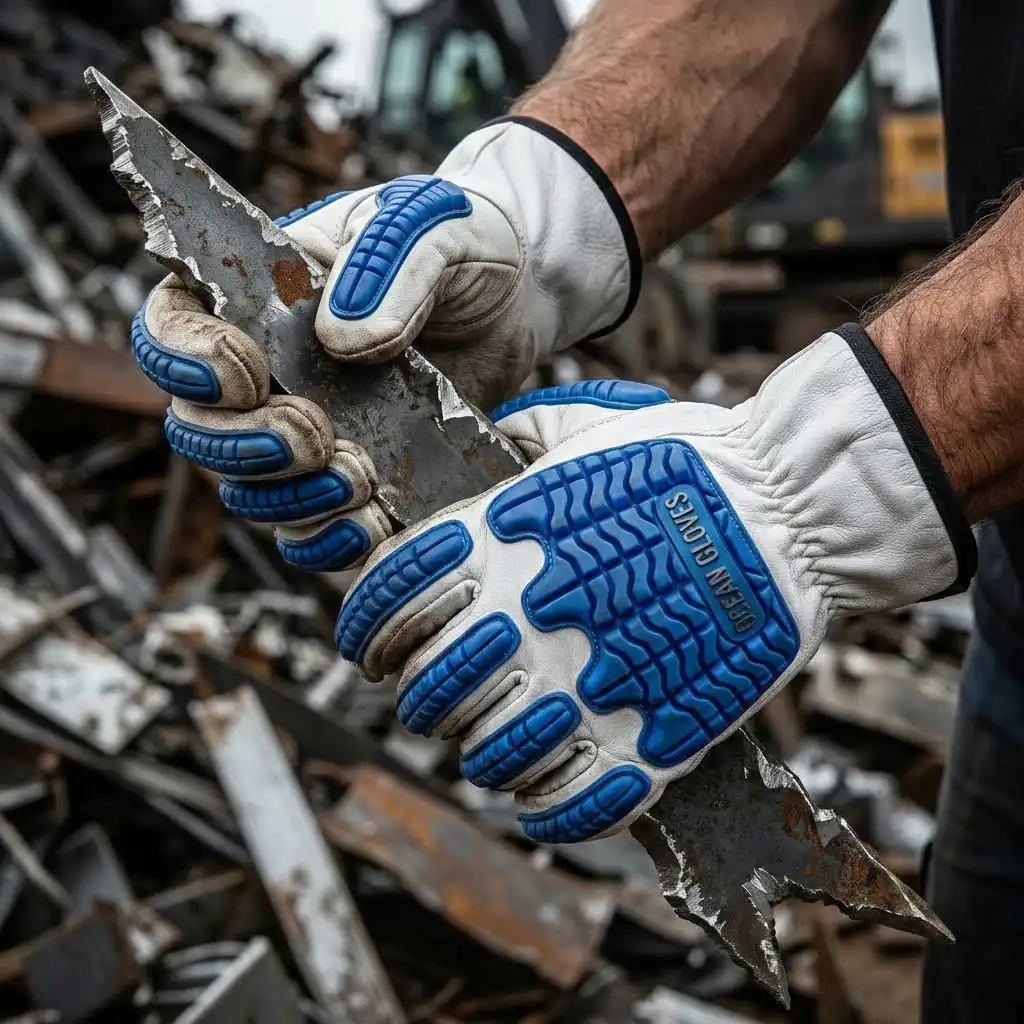
Impact is only half the battle. In industries like mining and fabrication, sharp edges are a constant threat. This is why we engineer these as cut resistant assembly gloves using a full Kevlar lining. We do not use generic para-aramid fibers. We use branded Kevlar or high-performance equivalents that are certified for cut resistance.
The lining is floating-stitched into the goatskin shell. This technique prevents the lining from bunching up inside the finger tips which is a common complaint with inferior cut resistant impact gloves. The Kevlar lining provides a high strength-to-weight ratio, offering substantial cut protection assembly gloves ratings without making the glove bulky. This makes them ideal for drilling operations gloves where the operator needs to feel the controls while being protected from jagged drill bits or metal shavings.
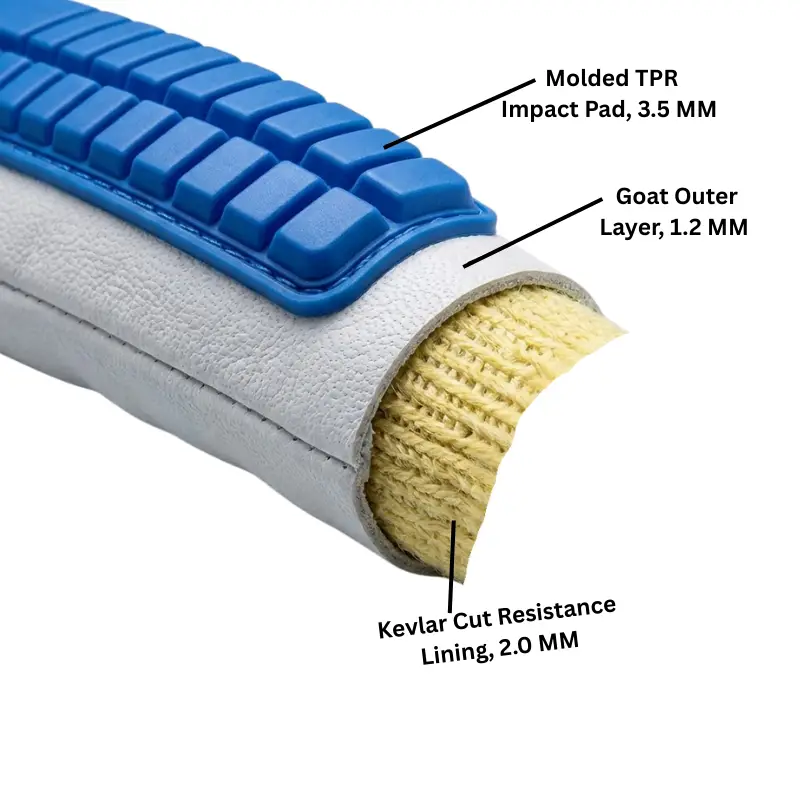
The glove finger showing the Goatskin outer layer, the TPR pad bonded to the top, and the inner Kevlar loop-pile lining, labeled with thickness in millimeters.
Raw to Box: The Manufacturing Process of Impact Resistant Assembly Gloves with Kevlar Lining
Understanding our manufacturing process highlights why we are the preferred Kevlar assembly gloves manufacturer Sialkot. The journey begins at the tannery.
Leather Selection and Tanning: We select Grade A goatskin hides. Goatskin is naturally rich in lanolin, which keeps the leather soft and pliable even after repeated wet-dry cycles common in oil and gas safety gloves. We tan the leather to a specific pH balance to prevent skin irritation and ensure compatibility with the Kevlar lining.
Die Cutting and Preparation: The leather is clicked or die-cut using hydraulic presses. We cut the trank (the main body of the glove) and the fourchettes (the strips between fingers) with precision. Simultaneously, the Kevlar lining is knitted and cut to the exact same pattern to ensure a zero-tolerance fit.
TPR Bonding and Sonic Welding: This is a critical step for anti-impact assembly gloves. The TPR pads are not just glued. They are often sewn or sonically welded to the leather back. We ensure that the stitching for the TPR does not penetrate the inner lining in a way that would compromise comfort.
Assembly and Stitching: We use Kevlar thread stitching for the entire assembly. Standard nylon or cotton thread will rot when exposed to oil or snap under tension. Kevlar thread ensures the seams last as long as the leather.
Quality Control: Every pair of cut and impact resistant assembly gloves with Kevlar lining undergoes a rigorous inspection. We check for missed stitches, TPR adhesion, and lining integrity before the gloves are boxed for export.
Material Comparison: Why Goatskin Leather Kevlar Gloves?
We frequently get asked why we use goatskin instead of cowhide for this specific SKUs.
Goatskin vs. Cowhide: Cowhide is durable but thick and stiff. Goatskin has a tighter fiber structure. This allows us to shave the leather down to 0.8mm for dexterity while maintaining a tensile strength higher than cowhide of the same thickness. For automotive mechanics gloves and industrial maintenance gloves, this dexterity is non-negotiable.
Kevlar vs. HPPE: High Performance Polyethylene (HPPE) is cool to the touch but has lower heat resistance. Kevlar provides inherent heat resistance and does not melt. This makes Kevlar lined assembly gloves superior for environments where friction heat or incidental heat contact is a risk.
Technical DNA Specifications for Heavy Duty Impact Gloves
The following table outlines the technical specifications that procurement managers need to know when selecting mining impact gloves or construction impact gloves.
| Specification | Technical Detail | Engineering Benefit |
| Shell Material | Premium Full-Grain Goatskin | High tensile strength, excellent dexterity, natural lanolin content. |
| Lining Material | 100% Kevlar / Aramid Fiber | High cut resistance, heat resistance, lightweight insulation. |
| Impact Material | Thermoplastic Rubber (TPR) | High shock absorption, segmented for flexibility, abrasion resistant. |
| Thread Type | Kevlar / Aramid Thread | High breaking strength, resistant to oil and rot, heat resistant. |
| Palm Pattern | Wing Thumb or Keystone Thumb | Ergonomic fit, reduces hand fatigue during heavy equipment operation. |
| Cuff Style | Elasticized Slip-on or Velcro | Secure fit, prevents debris entry, easy donning and doffing. |
| Leather Thickness | 0.7mm – 0.9mm | Balanced tactile sensitivity with abrasion durability. |
| Impact Coverage | Metacarpals, Knuckles, Fingers | Protects the most vulnerable bones from crush injuries. |
Addressing the Need for Heavy Equipment Operation Gloves
Operators of heavy machinery face unique risks. They deal with high vibration and the potential for crushing injuries during maintenance. Our design incorporates anti-vibration design elements through the leather and lining combination. The soft goatskin dexterity allows operators to manipulate small controls and levers without removing their gloves. This compliance is vital. The safest glove is the one the worker actually wears. By maintaining touch sensitivity maintained through the fingertips, we ensure that safety protocols are followed in distribution centers and construction sites.
Solving Metacarpal Fractures in Oil and Gas
A prominent client in the petroleum sector approached us with a high incidence of hand injuries. Their workers were using standard leather riggers. They were suffering from cuts during pipe handling and fractures from slipped wrenches. Ocean acted as their impact gloves exporter exporter Pakistan and developed a custom solution. We introduced our heavy-duty impact resistant assembly gloves for construction and oil fields.
Our factory utilized bright color safety details on the TPR to improve visibility in low-light conditions. We reinforced the saddle (the area between thumb and index finger) which is a high-wear zone in drilling operations. The result was a 60% reduction in hand recordable incidents within the first six months. This proves the efficacy of TPR impact protection assembly gloves for mining operations and oil extraction.
Global Supply Chain: Cut Resistant Gloves Supplier Pakistan
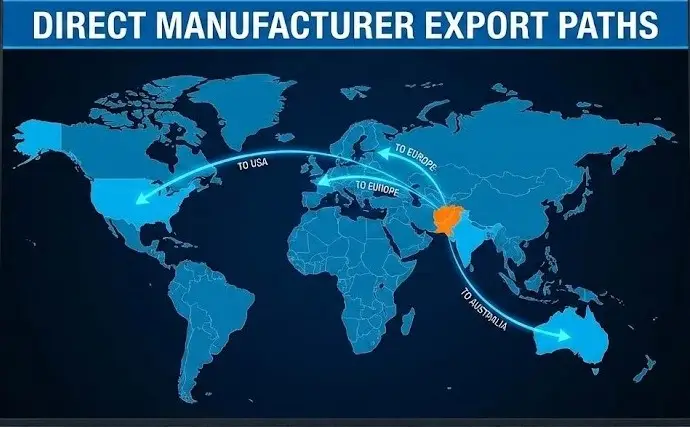
Sialkot is the global hub for technical glove manufacturing. As a cut resistant gloves supplier Pakistan, Ocean Gloves Corporation has access to the best raw materials and skilled labor. We act as a Kevlar lined cut resistant assembly gloves manufacturer Pakistan for major brands in Europe and North America. We provide anti-impact assembly gloves with full Kevlar lining Sialkot direct to distributors, ensuring you get the exact specifications you require without dilution of quality. Whether you need mining impact gloves or oil and gas impact gloves, our facility is equipped to handle high-volume orders with consistent quality.
FAQs
Why do we use Kevlar thread stitching instead of nylon for impact resistant assembly gloves?
Nylon thread degrades rapidly when exposed to UV light and industrial oils. We use Kevlar thread because it maintains its tensile strength in harsh environments, ensuring the glove does not fall apart before the leather wears out.
How does the TPR impact protection affect the flexibility of the glove?
We use a segmented TPR design. Instead of a solid block of rubber, the impact guards have channels cut into them that align with your knuckles, allowing the hand to close fully without significant resistance.
Can these gloves be used as oil and gas safety gloves?
Yes, goatskin has natural oils that resist stiffening after drying. The Kevlar lining and thread are also resistant to many petroleum-based chemicals, making them ideal for this sector.
What is the difference between standard leather gloves and cut protection assembly gloves?
Standard leather offers abrasion resistance but very little cut resistance. Our gloves feature a knitted Kevlar liner that acts as a chainmail shield against slicing edges, significantly raising the safety level.
Why is goatskin preferred for mechanical impact gloves over cowhide?
Goatskin provides a better strength-to-weight ratio. It allows us to make a thinner, more flexible glove that still has high abrasion resistance, which is critical for mechanics who need to feel nuts and bolts.
Do these gloves meet standards for heavy duty impact gloves in mining?
While specific site standards vary, these gloves are engineered with extensive TPR coverage and high-visibility colors specifically designed to meet the rigorous demands of the mining industry.
Does the full Kevlar lining reduce the tactile sensitivity of the glove?
There is always a slight trade-off, but we use a fine-gauge Kevlar knit that fits tightly against the leather. This minimizes bulk and maintains enough touch sensitivity for most assembly tasks.
How do you ensure the TPR pads do not peel off the anti-impact assembly gloves?
We use a combination of industrial-grade adhesive and physical stitching or sonic welding. This dual-bonding process ensures the impact guards stay attached even under heavy abrasion.
Are these suitable as heavy equipment operation gloves?
Absolutely. The vibration dampening properties of the leather and lining, combined with the impact protection, make them excellent for operating jackhammers, drills, and heavy loaders.
What makes you a reliable Kevlar assembly gloves manufacturer Sialkot?
We control the entire process from the tannery to the final stitching. This vertical integration allows us to guarantee the authenticity of the Kevlar and the quality of the leather.
Can I use these as automotive mechanics gloves for engine work?
Yes, the dexterity of goatskin makes them suitable for engine work. However, you should be aware that the TPR backing adds some bulk, which might limit access to very tight engine spaces.
How does the anti-vibration design work in these gloves?
The combination of the goatskin shell, the Kevlar lining, and the TPR backing creates multiple layers of different densities. These layers help to disrupt and absorb vibration waves before they reach the hand.
Why are bright color safety details important on impact gloves?
In environments like construction and mining, hand visibility is a safety factor. High-visibility TPR helps crane operators and co-workers see exactly where your hands are, preventing accidental crushing.
Do you produce heavy-duty impact resistant assembly gloves for construction with winter lining?
This specific SKU utilizes a Kevlar lining which offers some thermal insulation, but we can manufacture custom variations with Thinsulate for extreme cold weather construction if required.
What is the advantage of using TPR impact protection assembly gloves for mining operations?
Mines are full of pinch points and falling rock hazards. TPR provides a sacrificial layer that absorbs the energy of a blow, often preventing the bone fractures that are common in mining accidents.
How do these perform as industrial maintenance gloves?
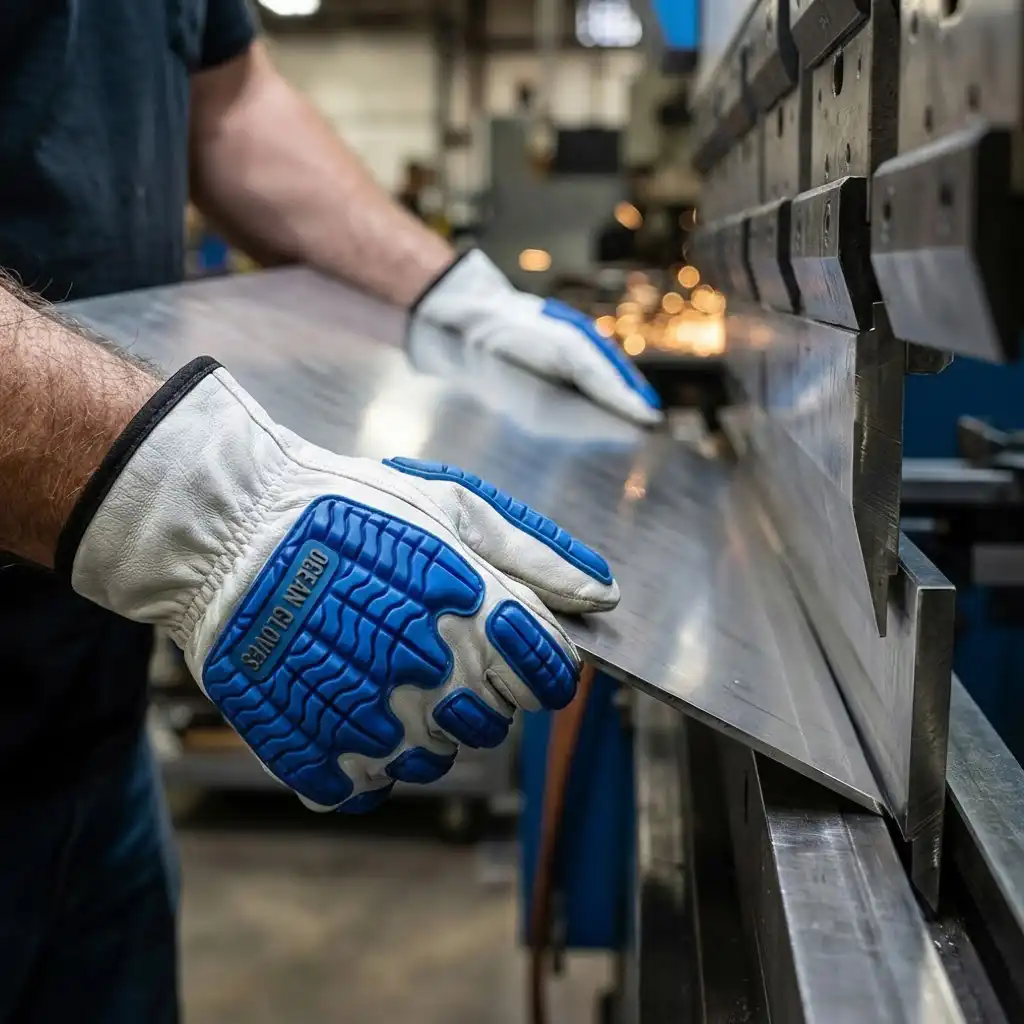
They are the ultimate multi-role glove. They protect against cuts from sheet metal, impacts from slipped wrenches, and abrasion from rough surfaces, covering all major risks in maintenance.
Why is Ocean Gloves the best cut resistant gloves supplier Pakistan?
We do not outsource. We are the factory. This means we can customize the thickness of the TPR and the cut level of the Kevlar to meet your exact price and performance requirements.
Are these gloves suitable for drilling operations gloves?
Yes, the grip of goatskin combined with impact protection makes them a standard choice for drilling rigs where slippery mud and heavy chains are constant hazards.
How do anti-impact assembly gloves with full Kevlar lining Sialkot compare to Chinese alternatives?
Pakistan has a superior supply of high-grade goatskin compared to China. Our leather is naturally softer and stronger, resulting in a glove that lasts longer and feels better to wear.
Can you manufacture custom cut and impact resistant assembly gloves with Kevlar lining?
Yes, as an OEM manufacturer, we can adjust the specs. We can add reinforcements, change the TPR design, or alter the cuff length to suit your specific corporate safety standards.
WhatsApp us or email Sales@oceangloves.com
Facebook | Twitter | Instagram | YouTube | LinkedIn